
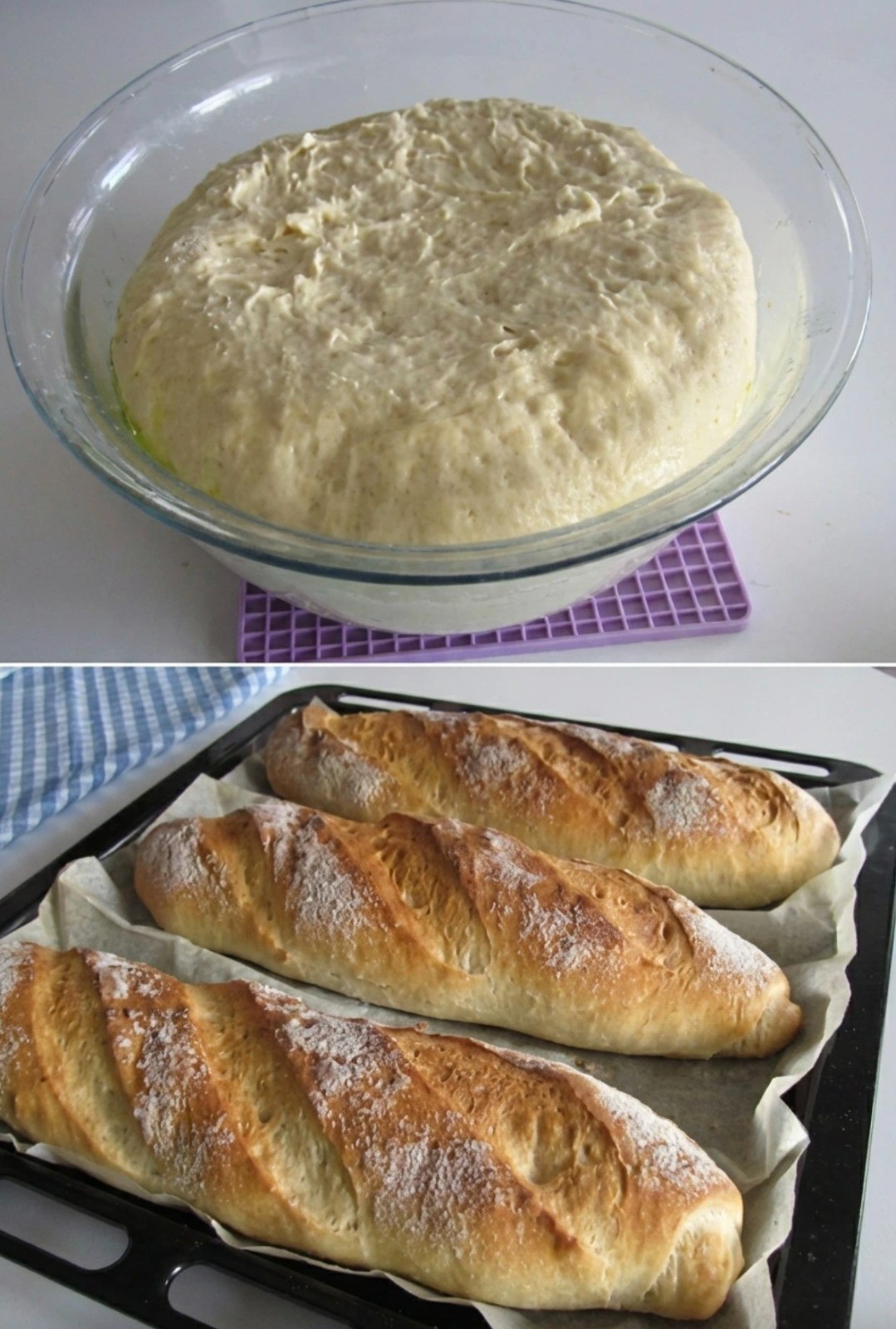
Seeded Crust: Before the final proof, brush the loaves lightly with water and roll them in sesame seeds, poppy seeds, or “everything” bagel seasoning.
Herb & Garlic: Knead 2 tbsp of finely chopped fresh rosemary or thyme and 2 minced garlic cloves into the dough during the yeast incorporation step.
The Ultimate Experience: Serve it still slightly warm with a plate of your best olive oil and flaky sea salt for dipping. It’s the perfect partner for soups, stews, and cheese boards.
Stale Bread? A Gift! Day-old bread makes the world’s best bruschetta, panzanella salad, or French toast. Or simply slice and toast it—it will regain its crunch.
FAQs: Your Bread Questions, Answered
Q: My crust isn’t very crisp. What happened?
A: The two most common culprits are 1) Not enough steam in the oven, or 2) Not baking at a high enough temperature. An oven thermometer can ensure your oven is truly at 450°F. Also, avoid wrapping the bread while it’s still warm, as trapped steam will soften the crust.
Q: Can I make the dough ahead of time?
A: Absolutely! After the first rise, you can gently deflate the dough, place it in a greased bowl, cover tightly, and refrigerate for up to 48 hours. This “cold ferment” actually develops more complex flavor. When ready, shape, let it come to room temperature and complete its final proof, then bake.
Q: How do I store it?
A: Store completely cooled bread in a paper bag at room temperature for 1-2 days. For longer storage, slice and freeze in a zip-top bag. Reheat frozen slices directly in a toaster or oven.
Q: My loaf is very dense. Why?
A: This usually means the dough didn’t rise enough (yeast may have been old, water was too hot, or the kitchen was too cold) or it was over-kneaded after the first rise, knocking out all the gas.
