
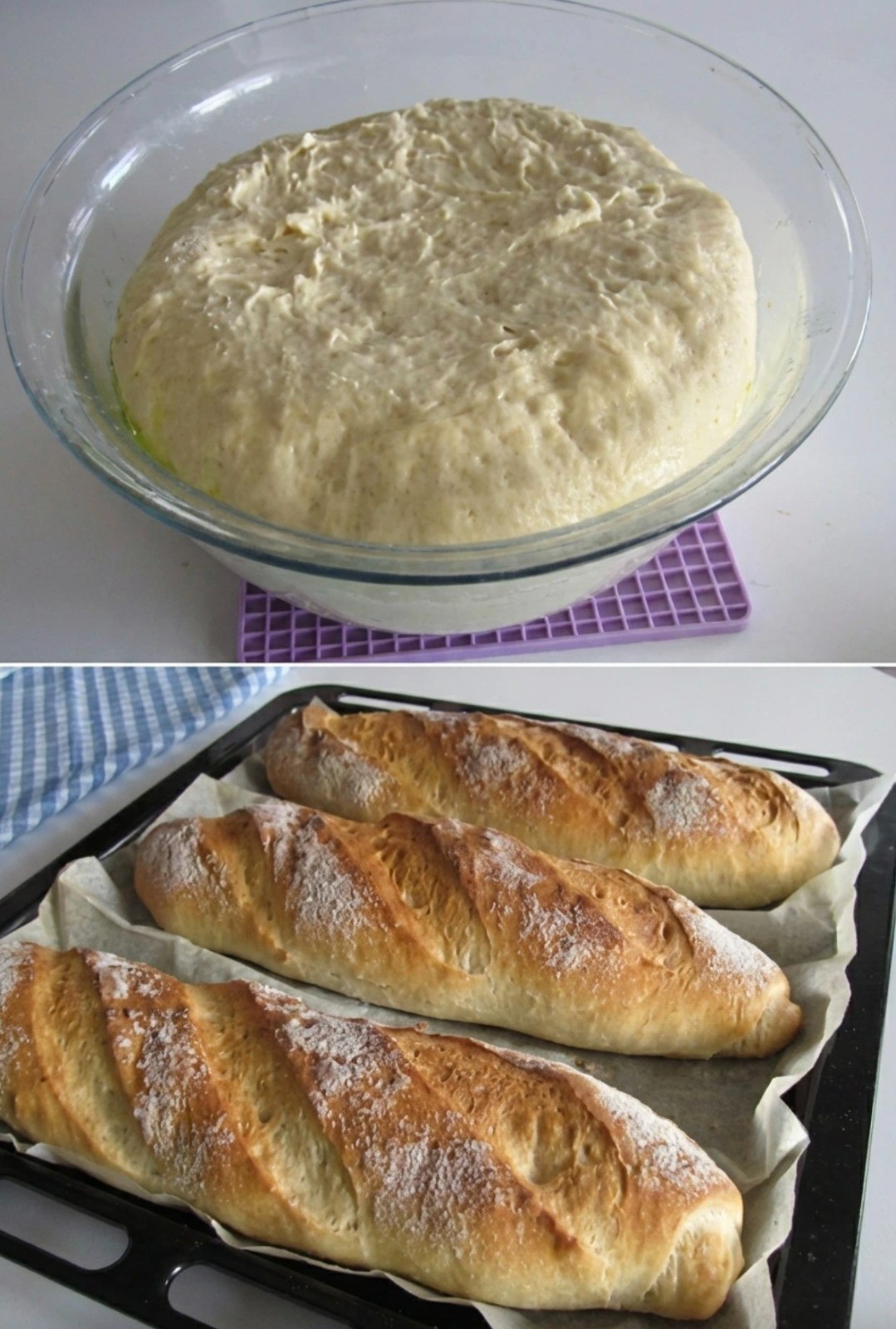
This process is a gentle dance, not a race. Plan for about 4 hours from start to finish, with most of that being hands-off rising time.
Step 1: The Autolyse (The Secret to Open Crumb)
In a large bowl, whisk the flour and salt together. Make a well in the center and pour in the warm water. Using a sturdy spatula or your hand, mix until you have a shaggy, rough dough with no dry flour patches. This will take just a minute. Now, walk away. Cover the bowl with a damp kitchen towel and let it rest for 30 minutes. This “autolyse” allows the flour to fully hydrate, making the dough easier to work with and developing the gluten structure naturally. You’ll see a change when you come back.
Step 2: Incorporate the Yeast & First Rise
After the 30-minute rest, sprinkle the instant yeast evenly over the dough. Now, it’s time to get your hands in. Reach into the bowl and begin folding, pinching, and kneading the yeast into the dough right in the bowl. Do this for about 3-4 minutes until the yeast is fully incorporated and the dough feels more cohesive. It will be slightly sticky—that’s perfect.
Cover the bowl again with the damp towel or plastic wrap. Let it rise in a warm, draft-free spot for 1.5 to 2 hours, or until it has nearly doubled in size.
Step 3: Shape with Confidence
Gently turn the risen dough out onto a lightly floured surface. Do not punch it down. We want to preserve those lovely air bubbles. Divide it in half with a bench scraper or sharp knife.
To shape each half into a classic bâtard (a shorter, fatter baguette shape):
Gently pat one piece into a rough rectangle.
Fold the top third down towards the center, and press the seam with your fingertips.
Fold the bottom third up over that, and seal the seam again.
Now, starting from the center, use both hands to gently roll and elongate the dough into a loaf about 12-14 inches long, applying slight pressure to create surface tension on the outer “skin” of the dough.
Step 4: The Final Proof
Read more on next page
